CURRENT MOON

Archive for the ‘Meteors’ Category

Watch Asteroid Flyby LIVE!

Watch The Asteroid Flyby LIVE!

Read the rest of this entry »

Quadrantid Meteor Shower 2013

Quadrantid Meteor Shower 2013

612993main quadrantids2 466 Quadrantid Meteor Shower 2013

Quadrantid Meteor Shower Credit: nasa.org

The Quadrantid Meteor Shower ushers in 2013 with its peak in the early hours of the 3rd of January.

The Quadrantids can be an impressive meteor shower with rates of up to 120 meteors per hour at its peak (under perfect conditions) and have been known to produce rates of up to 200 meteors per hour. The peak is quite narrow lasting only a few hours, however there will be plenty of meteors to look out for either side of maximum. Read the rest of this entry »

Where and When do I look to see a Meteor Shower?

Where and When do I look to see a Meteor Shower?

GeminidAurora Hansen1 600x400 Where and When do I look to see a Meteor Shower?

Aurora Shimmer, Meteor Flash Credit: APOD Bjørnar G. Hansen

I am asked all the time when there is a meteor shower: “What direction do I need to look to see the meteors” and “what time”?

Scroll down to the end of this post if you only want the answer and not learn why…

These questions as well as many others seem to have had laboured answers in the past, but the reality is, astronomy is dead easy and you don’t need to be exact unless you are taking images or doing proper research or science. The average person with an interest in the night sky doesn’t need to know all the technical ins and outs, especially if they are doing naked eye observing without equipment like a telescope. Read the rest of this entry »

2012 Orionid Meteor Shower Peaks This Weekend

Nighted Vail by Brad Goldpaint1 2012 Orionid Meteor Shower Peaks This Weekend

A composite image of every meteor captured in a viewing session for the 2011 Orionid Meteor shower at Middle Falls, near Mount Shasta in California. Credit: Brad Goldpaint/Goldpaint Photography. Used by permission Universe Today.


The Earth will soon be traveling through the stream of debris left behind by Halley’s Comet, providing the annual sky show called the Orionid Meteor Shower. This usually reliable meteor shower is expected to peak this coming weekend, October 20-21, 2012, and should produce about 25 meteors per hour, according to the McDonald Observatory at The University of Texas in Austin.

How can you see the show?

Read more…


The Easiest Guide To The Perseids Ever!

perseid chumack 2012 580x436 The Easiest Guide To The Perseids Ever!

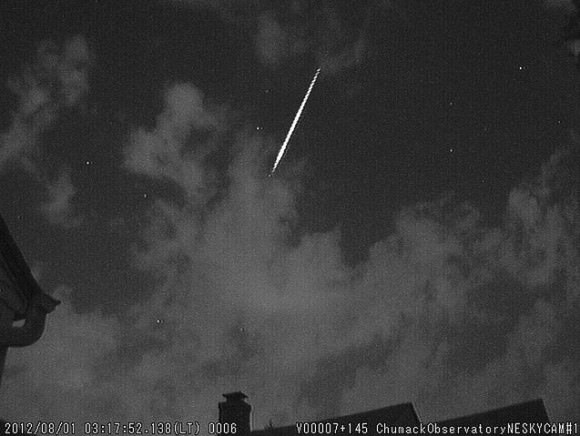
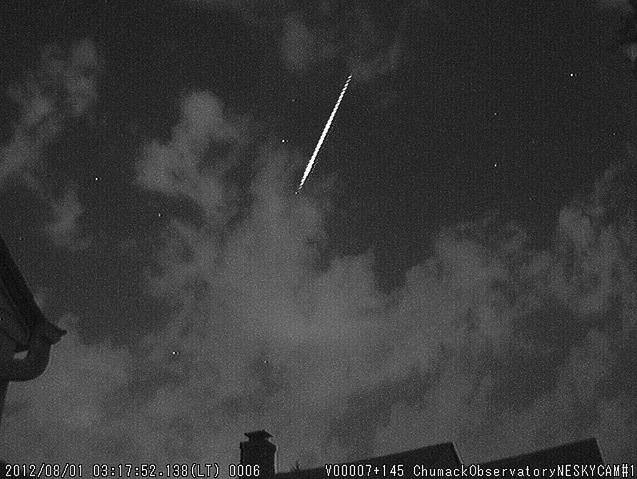
A bright fireball meteor on August 1, 2012. Credit: John Chumack.


Originally posted on Universetoday by Virtualastro

This will probably be the most simple and easiest guide to viewing the Perseids and other meteor showers you may possibly ever read. The reason why it is so simple is when you are outside you want to concentrate on looking for meteors and not worrying about technical details, which are unnecessary for the casual observer.

First, a LITTLE about the Perseids: Read the rest of this entry »

What’s a Zenithal Hourly Rate? Meteor Shower Terminology 101.

Edgar Chen1 600x409 What’s a Zenithal Hourly Rate? Meteor Shower Terminology 101.

Doubtless you’ve heard astronomers and meteor shower observers kick around terms such as “bolide,” “sporadic” and “Zenithal Hourly Rate” when it comes to showers like this weekend’s Perseids. Like any field of endeavor, these terms and phrases and help to describe what we see (or expect to see) and aren’t just designed to make us unpopular at cocktail parties. Here’s a quick rundown on terms that should be in your meteor watcher’s lexicon; use em’ to impress (or annoy) your friends while you watch for this weekend’s Perseids;   Read the rest of this entry »

Night Sky Guide August 2012

Constellations, deep-sky objects, planets and events, Tonight’s Sky, Highlights of the August Sky Read the rest of this entry »

The Perseid Meteor Shower 2012

perseidMeteors bruenjes big 600x399 The Perseid Meteor Shower 2012

Image Credit :- Astronomy Picture of the Day

The Perseids are one of the most prolific and best-known of the meteor showers and can be seen in late July and through August each year, with the maximum activity on or around 12/13 August. One advantage of the Perseids shower is that it happens in the warmer weather of Summer, which makes it ideal for anyone interested in seeing their first meteor. You can see a meteor at any time of year but, for a day or so around the date of maximum, there may be a ten times better chance of seeing one. Read the rest of this entry »

A Wonderful Night in April: The Lyrids Meteor Shower

Fireball Witnessed Over UK 3rd March 2012

Fireball Witnessed Over UK 3rd March 2012