CURRENT MOON

Archive for the ‘Planets’ Category

Saturn – How To Find It Tonight

How to find the Planet Saturn tonight

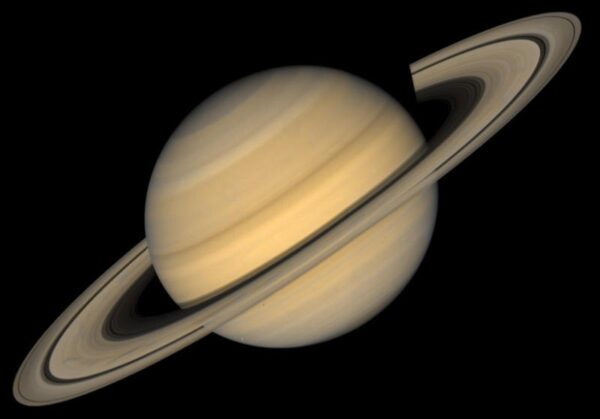
Saturn 28 April 13 NASA 600x419 Saturn   How To Find It Tonight

Credit: NASA


On April 28 2013 the ringed planet Saturn will be at opposition, meaning Saturn is opposite the Sun from Earth. The Sun Earth and Saturn form a straight line or alignment.

What this means is, Saturn will be visible all night in our skies.

Saturn is the second largest planet in the solar system to Jupiter (which can be seen low in the West) and is probably one of the most spectacular or beautiful objects visible to people on Earth. Even those beginning in astronomy or with a passing interest can see Saturn with the naked eye, through binoculars, or see its rings through a small telescope – It’s a breathtaking sight.

How to Find Saturn Read the rest of this entry »

Night Sky Guide March 2013

Night Sky Guide – Tonight’s Sky: March 2013

Your guide to constellations, deep – sky objects, planets and events, Tonight’s Sky, Read the rest of this entry »

Fossils Found on Mars

Fossils Found on Mars

IMG 0318 600x450 Fossils Found on Mars

Fossil on Mars Credit: VirtualAstro

Amazing Discovery – Fossil found on Mars

For a bit of fun


Night Sky Guide August 2012

Constellations, deep-sky objects, planets and events, Tonight’s Sky, Highlights of the August Sky Read the rest of this entry »

Sky Show: March 2012

The night sky for March 2012 Credit: hubblesite.org


Venus, Jupiter and the Crescent Moon Conjunction 26th February 2012

Moon Venus and Jupiter 26 02 12 600x467 Venus, Jupiter and the Crescent Moon Conjunction 26th February 2012

Tonight, just after sunset, Venus, Jupiter and a thin crescent Moon will line up and form a close thin triangle in the evening sky.

If you have clear skies, this spectacle will almost be impossible to miss after the Sun has set.

See the below diagram for positions of  the crescent moon, Venus and Jupiter – They will be an awesome sight!

26th Conjuction 600x432 Venus, Jupiter and the Crescent Moon Conjunction 26th February 2012

AstroEvents- Hunting things that “Flash” in the January Sky

DSC 0038 Labeled 600x528 AstroEvents  Hunting things that “Flash” in the January Sky

Credit: David Dickinsen

2012 is here, and the world shows no sign of ending as the heavens spin on their appointed rounds high overhead. But the diligent observer may be rewarded with several unique an spurious sights, both natural and manmade…

1st up is everyone’s favorite meteor shower named after an obsolete constellation; the Quadrantids peak the morning of January 4th in what is the first large meteor shower of the year. The peak is very swift, only lasting about 12 hours or so and is centered this year on 2:00 AM EST/7:00 AM UTC. This favors the U.S. East Coast in 2012, as the 79% waxing gibbous Moon will set around 2AM local the morning of the 4th for observers in mid-northern latitudes. The radiant of the shower lies at a declination of 52° degrees north at the junction of the modern constellations of Draco, Bootes and Hercules, and thus activity may be visible pre-midnite local, although the setting of the Moon and the rising of the radiant will raise sighting prospects considerably. Expect swift-moving meteors headed outward from the radiant above the handle of the Big Dipper to appear anywhere in the sky. The Quadrantids have been known since the early 1800’s, but there has been much conjecture as to the source parent body. Astronomer Fred Whipple noted in 1963 that the stream bears some resemblance to the Delta Aquarids, and that the orbital path has undergone alterations by the planet Jupiter in the last few thousand years. In 2003, SETI researcher Peter Jenniskens proposed that the source may be then recently discovered asteroid 2003 EH1, which has been tentatively linked to Comet C/1490 Y1, which approached Earth at a distance of 0.52 Astronomical Units on January 12th 1491. Be sure to keep an eye out for Quadrantids on these chilly January mornings, as we commemorate Quadrans Muralis, a constellation that is no longer! Read the rest of this entry »

Top Astronomy Events Coming Up in 2012

VirtualAstro Stargazing Graphic copy 580x387 Top Astronomy Events Coming Up in 2012

Stargazing Credit: http://twitter.com/VirtualAstro


As 2011 is drawing to a close, the festive season is here and many of us are winding down and looking forward to the holidays. But this is a great time to look ahead to 2012 and pencil into our calendar and diaries the top astronomical events we don’t want to miss next year.

2012 is going to be a great year for astronomy observing, with some rare and exciting things taking place and a good outlook with some of the regular annual events.

So what top wonders should we expect to see and what will 2012 bring? Read the rest of this entry »

NASA’s Kepler Mission Confirms Its First Planet in Habitable Zone of Sun-like Star

Originally posted by and full credit to NASA view the original article here

607690main Kepler22bArtwork 800 600 600x450 NASAs Kepler Mission Confirms Its First Planet in Habitable Zone of Sun like Star

This artist's conception illustrates Kepler-22b, a planet known to comfortably circle in the habitable zone of a sun-like star. Image credit: NASA/Ames/JPL-Caltech

NASA’s Kepler mission has confirmed its first planet in the “habitable zone,” the region where liquid water could exist on a planet’s surface. Kepler also has discovered more than 1,000 new planet candidates, nearly doubling its previously known count. Ten of these candidates are near-Earth-size and orbit in the habitable zone of their host star. Candidates require follow-up observations to verify they are actual planets.

The newly confirmed planet, Kepler-22b, is the smallest yet found to orbit in the middle of the habitable zone of a star similar to our sun. The planet is about 2.4 times the radius of Earth. Scientists don’t yet know if Kepler-22b has a predominantly rocky, gaseous or liquid composition, but its discovery is a step closer to finding Earth-like planets. Read the rest of this entry »

BBC Stargazing Live & #Meteorwatch

Professor Brian Cox and Dara O Briain host three days of live stargazing on BBC 2 featuring epic images from astronomers and observatories from around the globe.

f4b73a6c324ba583766320d5914069fd247317f9 BBC Stargazing Live & #Meteorwatch

There will be hundreds of free events up and down the country and many useful videos and guides on the Stargazing web page.

Stargazing Live is all about people doing astronomy and witnessing some of the most spectacular astronomical events, including the conjunction of the planets Jupiter and Uranus, the Quadrantid meteor shower and other wonders of the night sky.

In the spirit of getting everyone to look up and share all of the fantastic things going on as well as the BBC 2 program, meteorwatch.org will be doing a twitter meteorwatch for the quadrantids meteor shower, headed up by Adrian West (@VirtualAstro on Twitter).

As well as all the useful information for beginners on this site and tweets from many people joining in on twitter, meteorwatch.org will have the Meteormap.

Tweet #bbcstargazing or #meteorwatch – first part of your postcode – Country e.g UK – and how many meteors you just saw, e.g 3 to see your meteor results appear on the map.

Your tweet should look like this #bbcstargazing SE1 UK 2  or  #meteorwatch PL4 UK 1

Enjoy BBC Stargazing Live, the many events and Twitter Meteorwatch, but most of all, tell your family, tell your friends and tell everyone to look up and enjoy the majesty and wonders of the night sky!

The BBC is not moderating/ overseeing or is responsible for the content on this post, meteorwatch.org or the Twitter Meteorwatch.